Heavy-Duty Carbon Fiber Tripod vs Aluminum Tripod: Which Delivers Better Stability and Accuracy?

In professional surveying, construction layout, GNSS positioning, laser scanning, and geospatial data collection, tripod stability directly affects measurement accuracy. Choosing the right tripod can significantly improve field efficiency and reduce costly errors. Among the most popular options today, the Heavy-Duty Carbon Fiber Tripod and traditional aluminum tripod are frequently compared by surveyors and engineers.
Why Tripod Selection Matters in Surveying?
Surveying instruments such as GNSS receivers, total stations, robotic total stations, laser scanners, and construction lasers rely heavily on a stable platform. Even minor vibrations or movement can introduce measurement errors.
A high-quality Heavy-Duty Carbon Fiber Tripod provides a rigid and stable foundation that minimizes environmental interference and helps maintain instrument precision throughout the workday.
Understanding Heavy-Duty Carbon Fiber Tripods
What Is a Heavy-Duty Carbon Fiber Tripod?
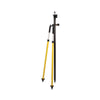
A Heavy-Duty Carbon Fiber Tripod is designed using advanced carbon fiber composite materials that offer exceptional strength while remaining lightweight. These tripods are engineered specifically for high-precision surveying applications where stability is critical.
Unlike traditional tripods, a Heavy-Duty Carbon Fiber Tripod effectively absorbs vibration and maintains structural rigidity under challenging field conditions.

Key Features
* Lightweight carbon fiber construction
* Superior vibration damping
* High load-bearing capacity
* Corrosion resistance
* Excellent thermal stability
* Long service life
Understanding Aluminum Tripods
What Is an Aluminum Tripod?
Aluminum tripods have been widely used in surveying for decades. They are made from durable aluminum alloy and offer an economical solution for general surveying tasks.
Although aluminum tripods provide reasonable performance, they are generally heavier and more susceptible to vibration transmission compared to a Heavy-Duty Carbon Fiber Tripod.
Common Characteristics
* Lower initial cost
* Durable metal construction
* Easy availability
* Suitable for standard surveying applications
However, when high precision is required, aluminum tripods may present limitations.
Stability Comparison: Heavy-Duty Carbon Fiber Tripod vs Aluminum Tripod
Vibration Resistance
One of the biggest advantages of a Heavy-Duty Carbon Fiber Tripod is its ability to absorb vibration.
Construction sites often experience:
* Heavy machinery operation
* Vehicle traffic
* Wind-induced movement
* Operator handling vibration
Carbon fiber naturally dampens these vibrations, helping instruments maintain stable positioning.
By contrast, aluminum tends to transmit vibrations through the tripod structure, potentially affecting measurement accuracy.
Winner: Heavy-Duty Carbon Fiber Tripod
Rigidity Under Load
Modern surveying equipment can be expensive and heavy.
Examples include:
* 3D laser scanners
* Robotic total stations
* GNSS base stations
* Monitoring equipment
A Heavy-Duty Carbon Fiber Tripod maintains excellent rigidity even when supporting heavy instruments.
This reduces unwanted movement and improves repeatability during measurements.
Winner: Heavy-Duty Carbon Fiber Tripod
Accuracy Comparison
Instrument Stability Equals Better Data
Accuracy depends on maintaining a fixed instrument position during data collection.
Because a Heavy-Duty Carbon Fiber Tripod minimizes vibration and movement, surveyors often achieve:
* Better coordinate consistency
* Improved scan quality
* Reduced measurement errors
* Higher-quality point cloud data
For applications requiring millimeter-level precision, tripod stability becomes a critical factor.
Winner: Heavy-Duty Carbon Fiber Tripod
Performance in Windy Conditions
Wind is one of the most common challenges faced by surveyors.
A Heavy-Duty Carbon Fiber Tripod performs exceptionally well because:
* Carbon fiber dampens oscillation quickly
* The structure remains rigid under load
* Less vibration reaches the instrument
Aluminum tripods may continue vibrating longer after wind gusts.
Winner: Heavy-Duty Carbon Fiber Tripod
Weight Comparison
Portability in the Field
Surveyors often carry equipment over long distances.
A Heavy-Duty Carbon Fiber Tripod can weigh significantly less than an equivalent aluminum tripod while maintaining the same or greater strength.
Benefits include:
* Reduced operator fatigue
* Faster transportation
* Easier setup
* Increased productivity
Winner: Heavy-Duty Carbon Fiber Tripod
Durability and Environmental Resistance
Performance in Harsh Conditions
Surveying professionals work in various environments:
Construction sites
Coastal regions
Mining operations
Mountainous terrain
Extreme temperatures
A Heavy-Duty Carbon Fiber Tripod offers excellent resistance to:
Corrosion
Moisture
UV exposure
Temperature fluctuations
Aluminum can corrode over time and may expand or contract with temperature changes.
Winner: Heavy-Duty Carbon Fiber Tripod
Cost Considerations
Initial Investment vs Long-Term Value
Aluminum tripods generally have a lower upfront cost.
However, a Heavy-Duty Carbon Fiber Tripod often provides:
Longer lifespan
Better accuracy
Reduced maintenance
Improved productivity
Higher return on investment
For professionals who depend on precision measurements daily, the additional investment is often justified.

Winner: Depends on Budget
For long-term professional use, the Heavy-Duty Carbon Fiber Tripod delivers greater value.
Core Advantages of a Heavy-Duty Carbon Fiber Tripod
Why Professionals Choose Heavy-Duty Carbon Fiber Tripods?
Superior Stability
Minimizes vibration and movement for high-precision surveying.
Enhanced Accuracy
Improves measurement reliability and data quality.
Lightweight Design
Easy to transport across job sites.
Excellent Durability
Resists corrosion, moisture, and harsh environments.
Long-Term Cost Savings
Reduced maintenance and longer service life.
Better Performance in Wind
Maintains instrument stability under challenging conditions.
Buying Considerations for a Heavy-Duty Carbon Fiber Tripod
Before purchasing a Heavy-Duty Carbon Fiber Tripod, consider the following factors:
Load Capacity
Ensure the tripod can safely support your surveying equipment.
Head Type
Choose a compatible flat head or dome head based on your instrument requirements.
Leg Lock System
Look for secure and reliable locking mechanisms.
Working Height
Select a tripod height suitable for your applications.
Compatibility
Verify compatibility with GNSS receivers, total stations, laser scanners, and other equipment.
Build Quality
Choose products from reputable manufacturers with proven performance records.
Frequently Asked Questions (FAQ)
Q1: Is a Heavy-Duty Carbon Fiber Tripod better than an aluminum tripod?
Yes. In most professional surveying applications, a Heavy-Duty Carbon Fiber Tripod offers better vibration damping, stability, and measurement accuracy.
Q2: Can a Heavy-Duty Carbon Fiber Tripod support a laser scanner?
Absolutely. Most professional Heavy-Duty Carbon Fiber Tripods are designed to support heavy laser scanners, robotic total stations, and GNSS systems.
Q3: Is carbon fiber durable enough for construction sites?
Yes. Carbon fiber is extremely strong, corrosion-resistant, and suitable for demanding field environments.
Q4: Does a Heavy-Duty Carbon Fiber Tripod improve GNSS accuracy?
Yes. Improved stability helps maintain antenna positioning and reduces measurement errors during data collection.
Q5: Is a Heavy-Duty Carbon Fiber Tripod worth the higher price?
For professionals requiring precision, efficiency, and long-term reliability, the investment is often well worth the additional cost.
Conclusion
When comparing a Heavy-Duty Carbon Fiber Tripod and an aluminum tripod, the carbon fiber option clearly stands out in terms of stability, vibration resistance, accuracy, portability, and durability. While aluminum tripods remain a cost-effective solution for basic applications, professionals seeking the highest level of performance will benefit significantly from investing in a Heavy-Duty Carbon Fiber Tripod. Its ability to provide a stable platform under demanding field conditions helps ensure more accurate measurements, greater efficiency, and long-term value.
Contact Mountlaser for Professional Heavy-Duty Carbon Fiber Tripod Solutions
Looking for a reliable Heavy-Duty Carbon Fiber Tripod for your GNSS receiver, total station, laser scanner, or construction surveying equipment? Our team specializes in high-performance surveying accessories designed to meet the needs of professional engineers, surveyors, and construction contractors worldwide.
Contact us today to learn more about our premium Heavy-Duty Carbon Fiber Tripod solutions, request a quotation, or receive expert recommendations tailored to your project requirements. We look forward to helping you improve surveying accuracy and field productivity.