Accuracy, Speed, and Integration: Why the Total Station surveying Remains the Ultimate Workhorse on the Construction Site
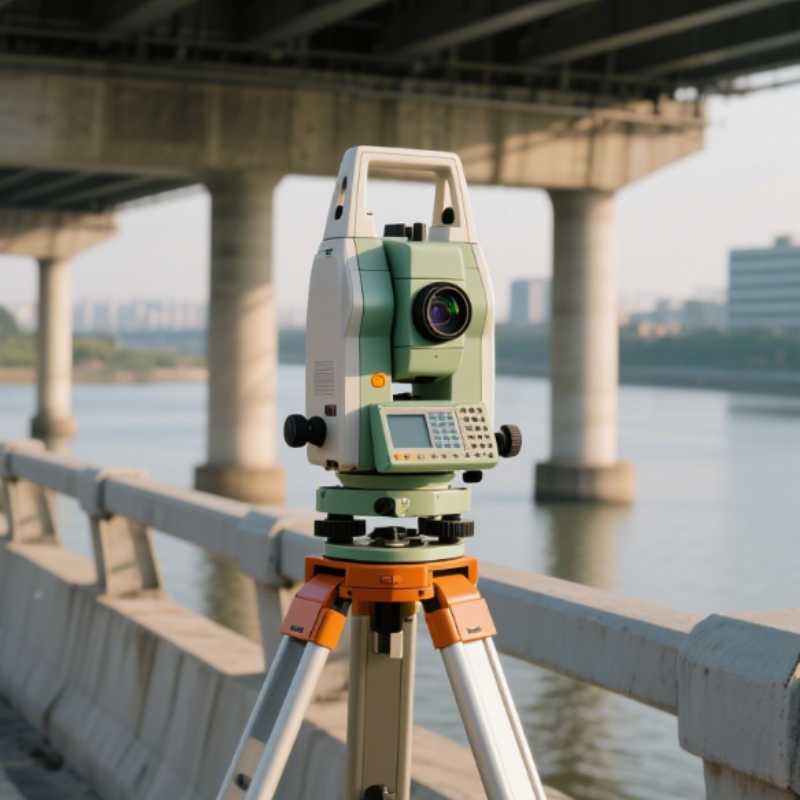
In the world of modern construction and land development, precision is not just a goal—it's an absolute requirement. At the heart of this precision-driven industry lies a category of total station survey equipment that has fundamentally changed how measurements are captured and utilized on site. These sophisticated electronic instruments combine an electronic theodolite with an electronic distance meter (EDM) to measure angles and distances with remarkable accuracy. For any project demanding exact spatial data, from laying the foundation of a skyscraper to aligning complex infrastructure, total station survey equipment is the indispensable tool that professionals rely on to get the job done right.

Total Station Technical Foundations: The Engine of Precision
The enduring dominance of the Total Station on construction sites isn't accidental. It's the direct result of its robust technical foundation, which delivers an unmatched combination of accuracy, efficiency, and data integration.
Unmatched Measurement Accuracy
The primary reason surveyors and engineers trust Total Stations is their phenomenal accuracy. Modern models can measure distances to within a few millimeters and angles to within a few arc-seconds. This incredible precision is achieved through advanced electro-optical technology. The instrument emits a laser beam to a prism or reflective target, and by analyzing the phase shift or time-of-flight of the returned signal, it calculates the distance with extreme fidelity. This ensures that every point staked out or measured is exactly where it's supposed to be, minimizing costly errors and rework.
Blazing Surveying Speed
Beyond raw accuracy, Total Stations dramatically accelerate the surveying process. Unlike traditional methods that required manual angle reading and tape measurements, a Total Station captures 3D coordinates (Northing, Easting, Elevation) of a point in seconds. The data is instantly digitized and stored within the instrument's onboard software or an connected data collector. This speed allows survey crews to capture thousands of data points in a single day, enabling rapid site modeling, progress monitoring, and quick decision-making that keeps projects on schedule.
Seamless Data Integration
Perhaps the most significant evolution in Total Station technology is its role as a data integration hub. Modern instruments are no longer isolated tools; they are key nodes in a digital construction workflow.

BIM Models: Field crews can import 3D Building Information Models (BIM) directly into the controller. The Total Station then guides them to stake out points based on the digital model, directly linking design to physical construction.
Office Software: Data collected in the field can be instantly exported to CAD (e.g., AutoCAD) and civil design software (e.g., Civil 3D), creating a closed loop between the field and the office that eliminates manual data transfer and its associated errors.
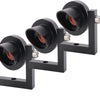
Automatic Target Recognition (ATR): This technology enables the Total Station to automatically locate, precisely point at, and lock onto a prism. This eliminates human error in pointing and significantly speeds up the measurement process, especially in high-precision applications.
GPS-Integrated Systems: Many modern systems combine robotic Total Stations with GNSS (GPS) receivers. This hybrid approach offers the best of both worlds: the absolute positioning of GPS in open areas and the ultra-precise relative accuracy of the Total Station in obstructed or indoor environments.
Key Considerations for Selection and Maintenance
Selection total station survey equipment Tips:
Required Accuracy: Determine the precision level your projects demand. Are millimeter-level tolerances needed, or will a few centimeters suffice?
Range and Compatibility: Consider the typical distances you need to measure and ensure compatibility with your existing prisms and data collectors.
Software Ecosystem: The instrument must be compatible with your preferred field and office software to ensure smooth data flow.
Durability: Look for instruments with a high Ingress Protection (IP) rating for dust and water resistance, crucial for harsh construction environments.
Maintenance Notes:
Always transport the instrument in its provided hardened case.
Calibrate the instrument regularly according to the manufacturer's specifications to maintain its accuracy.
Keep the lenses clean using only recommended tools and materials.
Store the Total Station and its batteries in a cool, dry place.
Conclusion
From its foundational role in capturing precise data to its advanced capabilities in robotics and digital integration, the Total Station has more than earned its title as the ultimate workhorse of the construction site. It is the critical link that ensures digital designs are translated perfectly into physical reality, with unparalleled speed and accuracy. For any serious professional in surveying, engineering, or construction, investing in the right Total Station is investing in the success, efficiency, and profitability of every project.
Ready to enhance your operational efficiency and project accuracy? When looking for a reliable Total Station manufacturer known for quality and support, look no further than Mountlaser. As a trusted Total Station supplier, we provide robust, high-precision instruments backed by expert service. Contact Mountlaser today to find the perfect Total Station solution for your business needs and take the first step towards seamless integration and unmatched precision on your job site.