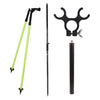
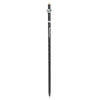
Carbon Fiber GPS Rover Pole: Lighter, Stronger, and Built for All-Day Surveying
Why a Carbon Fiber GPS Rover Pole Matters for Modern Surveying?
In land surveying, construction layout, and GIS data collection, the Carbon Fiber GPS Rover Pole serves as the critical physical link between your GNSS antenna and the ground point you are measuring. Every millimeter of pole deflection, every degree of thermal expansion, and every gram of unnecessary weight directly impacts the accuracy of your data and the fatigue of your field crew.
For surveyors running RTK GNSS systems all day across rugged terrain, the choice of rover pole is not a minor accessory decision—it is a fundamental equipment investment that determines productivity, precision, and long-term cost efficiency.
A Carbon Fiber GPS Rover Pole addresses the core limitations of traditional aluminum and fiberglass poles. It delivers the strength-to-weight ratio that professional surveyors demand, the thermal stability that millimeter-level work requires, and the durability that demanding field conditions demand.
This article explores why the Carbon Fiber GPS Rover Pole has become the standard for professional GNSS surveying, what features to evaluate, and how to choose the right model for your workflow.
What Makes a Carbon Fiber GPS Rover Pole Different?
Material Science Advantage
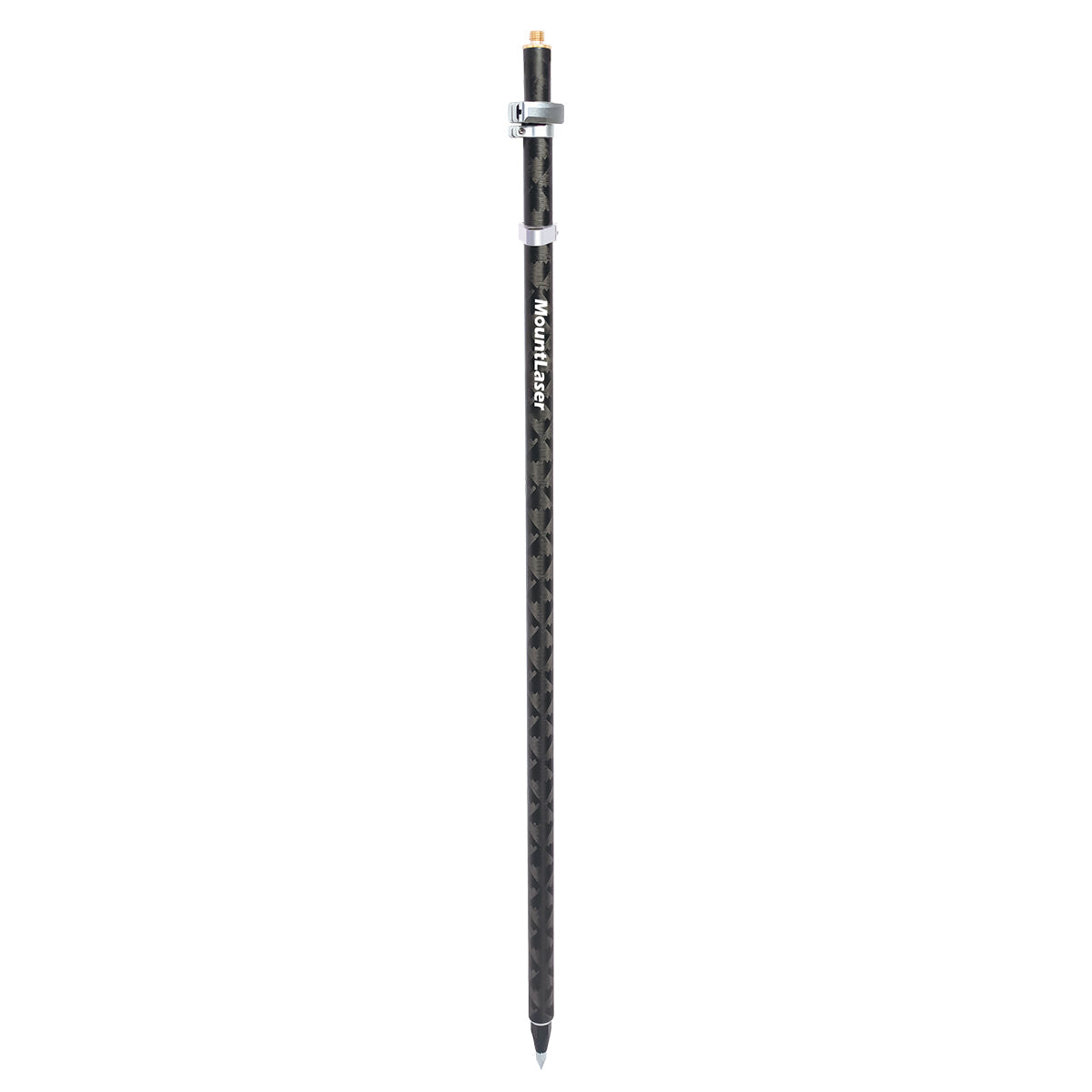
The defining characteristic of a Carbon Fiber GPS Rover Pole is its construction material. Carbon fiber composites offer an exceptional strength-to-weight ratio compared to aluminum, the traditional material for rover poles.
A typical 2-meter Carbon Fiber GPS Rover Pole weighs approximately 0.9 kg, while an equivalent aluminum pole can be 30–40% heavier. For surveyors holding a pole for hours of kinematic data collection, this weight difference translates directly into reduced operator fatigue and sustained productivity throughout the workday.
Beyond weight, carbon fiber provides superior bending stiffness. This rigidity ensures that the Carbon Fiber GPS Rover Pole maintains its straightness under load, reducing the flexing that can introduce elevation errors during static observations or kinematic surveys.
Thermal Stability for Precision Work
One often-overlooked advantage of a Carbon Fiber GPS Rover Pole is its low coefficient of thermal expansion. Aluminum expands approximately 23 micrometers per meter per degree Celsius, while carbon fiber expands almost negligibly in the fiber direction.
Over a 2-meter pole and a 30°C temperature swing between morning and afternoon, an aluminum pole can change length by up to 1.4 mm. For surveyors working at centimeter-level accuracy, this is a significant error source. A Carbon Fiber GPS Rover Pole eliminates this variable, ensuring consistent antenna height regardless of ambient temperature changes.

Key Features to Evaluate in a Carbon Fiber GPS Rover Pole
Locking Mechanism Reliability
The locking system determines how securely your Carbon Fiber GPS Rover Pole maintains its set height during measurement. Common designs include twist-locks, compression locks, snap locks, and pin-lock systems.
Twist-lock mechanisms are widespread but can become difficult to operate in cold weather or when contaminated with dirt. Compression and snap-lock systems offer more reliable performance in adverse conditions. Pin-lock designs with preset heights (e.g., 1.8 m, 2.0 m, 2.2 m) provide the most repeatable positioning for surveyors who work primarily at standard heights.
When selecting a Carbon Fiber GPS Rover Pole, consider your typical working environment. Surveyors in dusty or cold climates should prioritize eccentric clamps or compression locks over simple twist mechanisms.
Height Range and Section Design
A Carbon Fiber GPS Rover Pole typically extends from a collapsed length of 60–74 cm to a working height of 1.8–2.6 meters. The number of sections affects both portability and rigidity.
Two-section poles offer maximum stiffness but longer collapsed lengths. Four-section poles collapse more compactly for transport but introduce additional flex points. For most GNSS rover applications, a 2-meter pole with 2–4 sections represents the optimal balance between portability and stability.
Bubble Vial and Leveling Accuracy
Most Carbon Fiber GPS Rover Pole models include an integrated circular bubble vial, typically 30-minute or 40-minute sensitivity. This vial enables quick leveling in the field, ensuring the pole is plumb before recording data.
For critical measurements, surveyors should regularly calibrate the bubble vial by rotating the Carbon Fiber GPS Rover Pole 90° against a known plumb reference. Many experienced users also add a second, higher-mounted vial for improved visibility while holding the pole.
Thread Compatibility
The universal standard for GNSS antenna mounting is a 5/8″-11 thread. Before purchasing a Carbon Fiber GPS Rover Pole, verify that it uses this standard thread to ensure compatibility with your GNSS receiver, prism, or antenna adapter.
Product Specifications and Core Advantages
Mountlaser Carbon Fiber GPS Rover Pole Selection
Mountlaser offers a range of Carbon Fiber GPS Rover Pole models designed for professional surveying applications.
| Model | Extension | Material | Lock Type | Bubble Base | Diameter |
|---|---|---|---|---|---|
| GLS30 | 200 cm | Premium Carbon Fiber | Compression & Snap | 30′ Circular Vial | 18/25 mm |
| GP220TL-AC | 220 cm | Aluminum/Economic Carbon Fiber | Twist | With Bubble | 25/32 mm |
| GP250TLD-2C | 250 cm | Premium All Carbon Fiber | Twist | With Bubble | 25/32 mm |
| N61008 | 200 cm (4-section) | 100% Carbon Fiber | Telescopic | Fixed Brass Feet | — |
Core Advantages Summary
The primary benefits of choosing a Carbon Fiber GPS Rover Pole include:
Weight reduction of 30–40% compared to aluminum poles, significantly reducing field fatigue
Low thermal expansion for consistent antenna height across temperature variations
High bending stiffness to minimize flexing and maintain measurement accuracy
Vibration damping properties that reduce signal disruption from handling
Corrosion resistance for long-term durability in all weather conditions

Purchase Considerations Before Buying a Carbon Fiber GPS Rover Pole
What to Check Before Ordering
Before purchasing a Carbon Fiber GPS Rover Pole, verify the following specifications:
Height requirements – Match the pole’s extended length to your typical working height. Most GNSS work occurs between 1.8 and 2.0 meters.
Locking mechanism preference – Twist, compression, snap, or pin-lock based on your field conditions and workflow.
Section count – Consider the trade-off between collapsed portability and extended rigidity.
Thread compatibility – Confirm 5/8″-11 thread for your GNSS receiver.
Bubble vial sensitivity – A 30′ or 40′ vial provides adequate leveling precision for most applications.
Graduation markings – Metric, imperial, or dual graduations for convenient height reference.
Contact Mountlaser for Carbon Fiber GPS Rover Pole Solutions
Mountlaser manufactures professional-grade Carbon Fiber GPS Rover Pole models for surveying and engineering applications. Whether you need a 2-meter rover rod for RTK GNSS work or a specialized extension pole, Mountlaser offers multiple configurations to match your equipment and workflow.
For product inquiries, bulk pricing, or technical consultation, contact the Mountlaser team directly. Their expertise in surveying equipment ensures you receive the right Carbon Fiber GPS Rover Pole for your specific project requirements.
Frequently Asked Questions About Carbon Fiber GPS Rover Pole
What is the difference between carbon fiber and aluminum GPS rover poles?
A Carbon Fiber GPS Rover Pole is approximately 30–40% lighter than aluminum and exhibits minimal thermal expansion. Aluminum poles are more affordable and can bend rather than break under impact, while carbon fiber offers superior stiffness and weight savings for extended field use.
How do I keep my Carbon Fiber GPS Rover Pole plumb during measurement?
Use the integrated bubble vial as your primary leveling reference. Rotate the pole 90° in increments against a known plumb point to calibrate the vial. For extended observations, consider using a bipod or tripod to maintain stability and reduce hand fatigue.
Can I use a Carbon Fiber GPS Rover Pole with any GNSS receiver?
Most Carbon Fiber GPS Rover Pole models use the standard 5/8″-11 thread, which is compatible with the majority of GNSS receivers, antennas, and prism adapters. Always verify thread compatibility before ordering.
What is the typical collapsed length of a Carbon Fiber GPS Rover Pole?
A 2-meter Carbon Fiber GPS Rover Pole with 4 sections typically collapses to approximately 60–74 cm for convenient transport. Two-section poles collapse to longer lengths but offer greater rigidity when extended.
How should I maintain my Carbon Fiber GPS Rover Pole?
Store your Carbon Fiber GPS Rover Pole in its protective carrying case when not in use. Inspect locking mechanisms and threads regularly for wear. Avoid sharp impacts that can crack carbon fiber. Check bubble vial calibration before critical measurements.
Conclusion
The Carbon Fiber GPS Rover Pole has become the standard choice for professional surveyors who demand accuracy, efficiency, and durability in their field equipment. Its lightweight construction reduces operator fatigue during extended surveys. Its thermal stability ensures consistent measurements regardless of temperature changes. Its rigidity minimizes flexing that can introduce errors.
From RTK GNSS data collection to construction stakeout, the Carbon Fiber GPS Rover Pole delivers the performance that modern surveying requires.
Choose your Carbon Fiber GPS Rover Pole wisely, maintain it properly, and it will serve as a dependable tool for years of professional surveying work.