Machine Control Receiver Solves Common Grading and Excavation Challenges
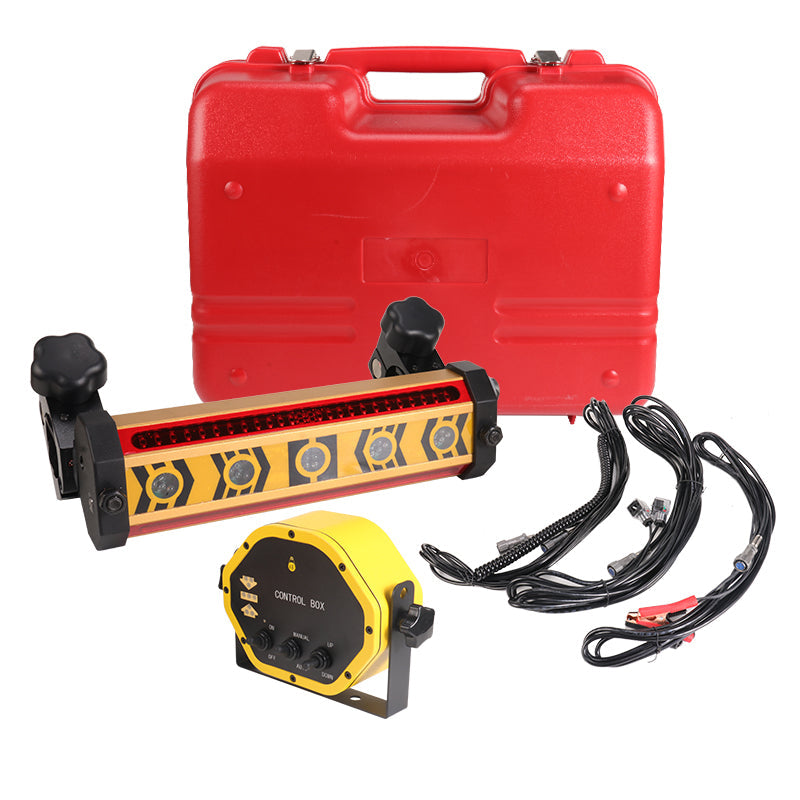
Accurate grading and excavation are essential for roads, foundations, drainage systems, utility trenches, and building pads. However, operators often deal with uneven terrain, poor visibility, dust, vibration, changing site conditions, and costly rework. A Machine Control Receiver provides real-time guidance from a rotating laser, helping operators maintain the correct elevation, slope, and digging depth directly from the cab.
What Is a Machine Control Receiver?
A Machine Control Receiver is a rugged detection device installed on construction equipment such as bulldozers, excavators, graders, and other earthmoving machines. It receives a laser reference signal and shows the operator whether the blade, bucket, or attachment is above, below, or on the required grade.
Instead of relying on frequent checks with stakes, rods, or a survey crew, operators can use the Machine Control Receiver for immediate visual or audio guidance. This makes earthwork more consistent and reduces unnecessary stops.
Common Grading and Excavation Challenges
Inconsistent Elevation and Slope
Even small grade errors can cause drainage problems, uneven foundations, and additional finishing work. Without continuous feedback, an operator may remove too much material in one location and leave excess material elsewhere. A Machine Control Receiver helps maintain the target elevation and slope across the work area.
Limited Visibility
Dust, rain, darkness, large attachments, and long working distances can make the surface difficult to judge. A Machine Control Receiver provides a dependable laser reference, allowing operators to work more confidently when direct visual judgment is unreliable.
Repeated Manual Measurement
Traditional grading often requires workers to stop the machine, measure the surface, and communicate corrections. This slows production and increases labor requirements. With a Machine Control Receiver, operators can make adjustments while moving, reducing interruptions and improving equipment utilization.

Over-Excavation and Material Waste
Removing material below the planned depth can create expensive rework. Soil may need to be transported away and then replaced with approved fill and compacted. A Machine Control Receiver improves depth awareness, helping operators remove only the material required for the design grade.
Challenging Jobsite Conditions
Construction equipment operates in mud, dust, rain, vibration, and changing temperatures. Therefore, a professional Machine Control Receiver should have a durable housing, reliable signal detection, and a secure mounting system suitable for outdoor use.
How a Machine Control Receiver Improves Performance
Faster Production
Real-time grade information reduces waiting time for measurements and allows operators to complete more passes with fewer corrections. This supports better machine utilization and more predictable schedules.
Better Accuracy
A Machine Control Receiver converts the laser plane into clear operator guidance. It supports accurate grading, trenching, slope work, and foundation preparation, helping reduce errors before later construction begins.
Lower Labor Costs
When operators receive direct grade information, ground crews do not need to check every pass. Surveyors can concentrate on control points, verification, and other critical tasks.
Improved Safety
Fewer personnel need to work close to moving machinery for routine measurements. Although a Machine Control Receiver does not replace site safety procedures, it can reduce unnecessary exposure around active equipment.
Machine Control Receiver with Screw Clamp vs. Strong Magnet
Machine Control Receiver with Screw Clamp
A Machine Control Receiver with Screw Clamp is attached by tightening a mechanical clamp around a suitable edge, rail, or support. Its main advantages are strong physical retention, stable positioning during vibration, and adjustable installation. It is a good choice for long-term use and demanding grading or excavation work where the receiver must remain firmly secured.
Machine Control Receiver with Strong Magnet
A Machine Control Receiver with Strong Magnet uses magnetic force for quick attachment and removal. Its main advantages are fast setup, easy repositioning, and convenient portability between machines or work areas. It is suitable for temporary measurements and contractors who frequently change equipment. The mounting surface should be clean, flat, and compatible with magnetic attachment.

Which Option Is Better?
Choose the screw clamp when long-term stability and mechanical security are the priority. Choose the strong magnet when fast installation and flexibility are more important. The correct choice depends on the machine structure, vibration level, mounting surface, and frequency of relocation.
Buying Considerations for a Machine Control Receiver
Before purchasing a Machine Control Receiver, confirm compatibility with the rotating laser, equipment type, detection range, and intended application. Review accuracy, detection window, LED or LCD indicators, audio guidance, battery life, and operating controls. The housing should resist dust, moisture, vibration, and normal jobsite impact.
Pay close attention to the mounting method. Check the dimensions of the machine’s mounting point before selecting a screw clamp or magnetic model. Also consider installation speed, alignment, cleaning, storage, warranty, replacement parts, and technical support.
Customers with specific requirements can contact Mountlaser, a professional Machine Control Receiver manufacturer, for product and configuration advice.
Frequently Asked Questions About Machine Control Receiver
Can a Machine Control Receiver be used on an excavator?
Yes. It can be used on an excavator or other earthmoving machine when the receiver is mounted correctly and is compatible with the laser reference system.
Is a screw clamp more stable than a magnet?
A screw clamp generally provides stronger mechanical retention for permanent or high-vibration applications. A strong magnet is faster to install and easier to move. Both can perform reliably when installed correctly.
Can it work at night or in dusty conditions?
Yes. The receiver detects a laser reference, so it can support low-light work. Keep the detection window clean and follow the manufacturer’s instructions in dusty or wet environments.
How should I maintain the receiver?
Clean the housing and detection window after use, inspect the clamp or magnet, replace batteries when necessary, and store the device in a dry protective case. Avoid drops and strong impacts.
Conclusion
A Machine Control Receiver addresses common grading and excavation problems such as inconsistent elevation, limited visibility, repeated measurement, over-excavation, and difficult outdoor conditions. It helps improve accuracy, production speed, labor efficiency, safety, and material control. The screw clamp version emphasizes secure long-term mounting, while the strong magnet version emphasizes quick setup and flexible relocation. Selecting the right Machine Control Receiver and mounting style can make earthmoving work more predictable and cost-effective.

Contact Mountlaser Today
If you need a dependable Machine Control Receiver for grading, excavation, trenching, or construction work, contact Mountlaser today. As a professional Machine Control Receiver manufacturer, Mountlaser can recommend a suitable screw clamp or strong magnet configuration for your equipment. Contact us to discuss your requirements and improve jobsite accuracy.