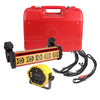
Surveying Bipod vs Tripod: Which Is Better for Modern Survey Applications?

In today's surveying industry, accuracy, efficiency, and stability are more important than ever. As GNSS technology, RTK positioning, and digital construction workflows continue to evolve, survey professionals are constantly evaluating the tools that support their daily operations.
One common question remains: Surveying Bipod vs Tripod: Which Is Better for Modern Survey Applications?
While both support systems play important roles in field surveying, the choice depends on the specific application, terrain conditions, and productivity requirements. At Mountlaser, we specialize in high-quality surveying accessories designed to help professionals achieve superior measurement accuracy.
In this article, we compare the advantages of a Surveying Bipod and a tripod to help surveyors make the best decision for modern projects.
Understanding the Role of a Surveying Bipod
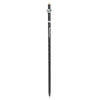
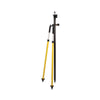
A Surveying Bipod is a lightweight support accessory designed to stabilize GPS rover poles, GNSS receivers, and RTK surveying equipment during data collection. Unlike traditional tripods, a Surveying Bipod uses two adjustable legs to provide quick support while allowing surveyors to move efficiently between survey points.
Modern surveying operations often require frequent relocation of equipment. A Surveying Bipod offers a practical solution by providing stability without sacrificing mobility.
Key Benefits of a Surveying Bipod
Fast setup and repositioning
Lightweight and easy to carry
Improved GPS rover pole stability
Reduced operator fatigue
Enhanced vertical accuracy during measurements
Ideal for RTK and GNSS surveying applications
For surveyors conducting topographic surveys, boundary surveys, construction staking, and infrastructure projects, a Surveying Bipod can significantly improve workflow efficiency.

When Does a Tripod Perform Better?
A tripod remains an essential tool for many surveying applications, particularly when using total stations, laser scanners, and static GNSS observations.
Tripods provide three-point ground contact, offering maximum stability for long-duration measurements where equipment remains stationary for extended periods.
Advantages of a Surveying Tripod
Superior long-term stability
Excellent support for total stations
Suitable for high-precision static observations
Performs well in windy conditions
Supports heavier surveying instruments
For applications requiring millimeter-level precision over long observation periods, a tripod is often the preferred solution.
Surveying Bipod vs Tripod: A Detailed Comparison
1. Mobility
Modern survey projects often demand rapid movement across job sites.
Surveying Bipod:Excellent mobility with quick setup and relocation.
Tripod:Requires more time to position and level.
Winner: Surveying Bipod
2. Productivity
Field crews are increasingly focused on maximizing efficiency.
A Surveying Bipod allows surveyors to collect data faster because the GPS rover pole can be stabilized immediately without extensive setup procedures.
Winner: Surveying Bipod

3. Stability
For static measurements, stability is critical.
A tripod's three-leg structure provides exceptional support and resistance to movement.
Winner: Tripod
4. RTK and GNSS Surveying Applications
RTK surveying requires frequent movement between points while maintaining pole verticality.
The Surveying Bipod was specifically developed to address this challenge by keeping rover poles stable while allowing efficient field operation.
Winner: Surveying Bipod
5. Construction Site Performance
Construction environments often involve uneven terrain and continuous movement.
A Surveying Bipod allows crews to work faster without repeatedly adjusting tripod legs.
Winner: Surveying Bipod
Why More Survey Professionals Are Choosing Surveying Bipods?
As construction, engineering, and geospatial industries continue to adopt real-time positioning technologies, the demand for efficient field equipment is increasing.
Many surveyors now use a Surveying Bipod as their preferred support solution for:
GPS rover pole applications
RTK surveying
Construction layout
Utility mapping
Topographic surveys
Infrastructure projects
Land development surveys
The ability of a Surveying Bipod to improve productivity while maintaining measurement accuracy makes it a valuable tool for modern survey crews.

Frequently Asked Questions (FAQ)
1. What is a Surveying Bipod used for?
A Surveying Bipod is designed to support and stabilize GPS rover poles, GNSS receivers, and RTK surveying equipment during field measurements. By keeping the pole vertical and reducing movement, a Surveying Bipod helps improve measurement accuracy and surveying efficiency.
2. Can a Surveying Bipod replace a tripod?
Not entirely. A Surveying Bipod is ideal for mobile applications such as RTK surveying, topographic surveys, and construction staking. However, a tripod remains the preferred choice for static observations, total station setups, and long-duration measurements that require maximum stability.
3. What features should I look for when choosing a Surveying Bipod?
When selecting a Surveying Bipod, consider the following features:
Lightweight but durable construction
Adjustable leg length
Strong locking mechanisms
Compatibility with GPS rover poles
Corrosion-resistant materials
Easy transport and setup
These features help ensure long-term performance in demanding field environments.
4. Why choose Mountlaser Surveying Bipods?
Mountlaser Surveying Bipods are engineered for professional surveyors who require accuracy, durability, and efficiency. Manufactured using high-quality materials and designed for demanding GNSS and RTK applications, Mountlaser Surveying Bipods help survey professionals achieve reliable results in construction, engineering, mapping, and land surveying projects worldwide.
Conclusion
When comparing a Surveying Bipod vs Tripod, there is no one-size-fits-all answer. A tripod remains the best choice for long-duration static observations and total station setups, while a Surveying Bipod offers unmatched advantages in mobility, productivity, and modern GNSS surveying workflows.
For today's fast-paced RTK and GPS surveying projects, the Surveying Bipod has become an indispensable tool that helps surveyors work more efficiently without compromising accuracy.
As a trusted manufacturer of professional surveying equipment and accessories, Mountlaser continues to develop high-performance Surveying Bipod solutions that meet the evolving needs of survey professionals around the world.