Why Surveyors Choose Mini Prisms for Lightweight Precision?
In the demanding world of surveying, construction, and engineering measurement, precision is non-negotiable—but neither is efficiency. Every minute spent hauling heavy equipment or struggling with bulky reflectors is a minute lost on the job site. That's why a growing number of professionals are turning to Mini Prisms as their go-to solution for lightweight precision.
Mini Prisms are compact optical reflectors designed to work with total stations, reflecting laser signals back to the instrument for accurate distance and angle measurements. Despite their small size—typically ranging from 12.7mm to 38.1mm in diameter—these precision instruments deliver millimetre-level accuracy that rivals or even exceeds that of full-sized prisms.
So what makes Mini Prisms the preferred choice for surveyors around the world? Let's break it down.
What Is a Mini Prism?
A Mini Prism is a small, high-precision optical device used with total stations to measure distances and angles. It operates on the principle of retroreflection—the ability to reflect a beam of light directly back to its source. When a total station emits an infrared or laser signal, the Mini Prism redirects that signal precisely along its incoming path, allowing the instrument to calculate distance with extreme accuracy.
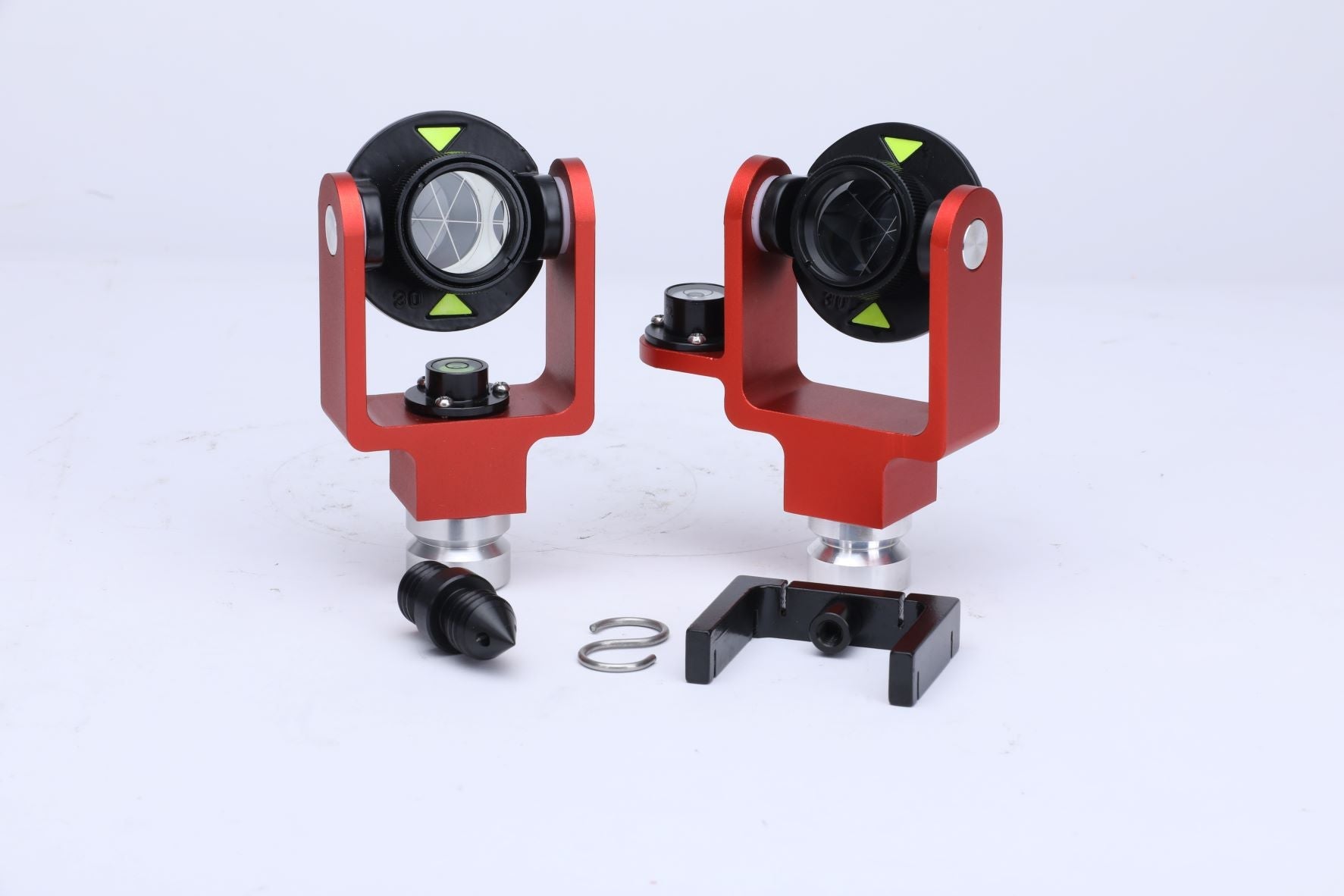
A typical Mini Prism consists of:
A precision glass prism housed in durable metal or polymer casing
A mounting system with threaded connections for poles, tripods, or brackets
A bubble level or tilting mechanism for fine alignment

The Core Advantages of Mini Prisms
1. Exceptional Portability and Lightweight Design
The most obvious advantage of a Mini Prism is its compact size and minimal weight. Weighing as little as 0.20 kg (0.45 lbs) for some L-bar models, Mini Prisms are far lighter than standard surveying prisms. This lightweight construction significantly reduces the physical burden on surveyors who spend long hours in the field.
The compact form factor also means Mini Prisms are easy to transport and store. They fit effortlessly into equipment cases, vehicle compartments, or even backpacks, making them ideal for surveyors who frequently move between job sites or work in remote locations.
2. Millimetre-Level Accuracy
Despite their small size, Mini Prisms deliver remarkable precision. Many models offer centring accuracy of 1.0 mm to 1.5 mm, with some high-end prisms rated at 0.3 mm accuracy. In fact, field tests have shown that Mini Prisms can be the most accurate prism type available, with some achieving errors of only 8 mm over 1,475 meters.
The small diameter of a Mini Prism actually enhances pointing accuracy—a smaller target means less room for error when aligning with the total station. This makes Mini Prisms particularly valuable for close-range work, stakeout tasks, and high-precision layout applications.
3. Superior Performance in Tight Spaces
Urban environments, indoor construction sites, tunnels, and other confined spaces present unique challenges for surveyors. Standard prisms and bulky equipment are often impractical in these settings. Mini Prisms, with their compact dimensions, excel precisely where larger equipment falls short.
Whether you're working in dense urban canyons, inside building structures, or in areas with obstructions, Mini Prisms allow you to take accurate measurements without the spatial constraints of traditional reflectors. They can be easily mounted on walls, poles, or even glued to difficult surfaces like glass and marble facades.
4. Versatile Mounting and Configuration Options
Modern Mini Prisms come with a wide range of mounting options to suit virtually any surveying scenario. Common thread options include 5/8", 3/8", M8, and Swiss thread configurations. This compatibility ensures that Mini Prisms can be easily integrated with existing total stations, tribrachs, and pole systems.
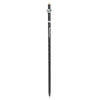
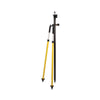
Many Mini Prism systems also feature modular designs with four-section poles that extend to working heights of up to 1.2 meters. This four-pole system allows for rapid on-site assembly and disassembly, providing exceptional adaptability across varying elevations and terrains.

5. Durable Construction for Field Conditions
Field surveying subjects equipment to harsh conditions—dust, moisture, temperature extremes, and physical impacts. Mini Prisms are built to withstand these challenges. Many feature nonferrous anodized aluminum bodies, copper or silver coatings for enhanced reflectivity and corrosion resistance, and durable nylon bases for stability.
This rugged construction ensures that your Mini Prism investment delivers reliable performance year after year, even in demanding environments.
6. Cost-Effectiveness
Investing in high-quality Mini Prisms can lead to significant cost savings over time. Accurate measurements minimize the risk of errors during construction and development projects, reducing potential rework and associated costs. Additionally, the durability and longevity of well-made Mini Prisms mean fewer replacements and lower total cost of ownership.
Common Applications for Mini Prisms
Construction Layout and Site Surveys
Mini Prisms are perfect for foundation layout, curb placement, and utility alignment in busy or confined areas. Their compact size allows surveyors to work efficiently without disrupting ongoing construction activities.
Structural Monitoring
Mini Prisms can be permanently mounted on bridges, tunnels, retaining walls, and other structures to monitor movement or deformation over time. Their small size minimizes interference with site operations while providing critical data for safety and structural integrity.
Close-Range and Obstructed Environments
When working in tight spaces or areas with obstructions, Mini Prisms offer the precision and manoeuvrability that standard prisms cannot match. They are particularly well-suited for stakeout, alignment, and short-range surveying tasks.
Purchasing Considerations for Mini Prisms
1. Total Station Compatibility – Verify that the Mini Prism you choose is compatible with your total station brand and model. Different instruments may require specific prism constants or mounting configurations.
2. Prism Constant – Mini Prisms come with different offset values, commonly ranging from 0 mm to +30 mm. Ensure you know the correct prism constant for your chosen model and can configure your total station accordingly.
3. Coating Type – Choose between copper or silver coating based on your working conditions. Copper coatings are often preferred for Leica and Geomax systems, while both options provide excellent reflectivity and corrosion resistance.
4. Size and Diameter – Mini Prisms are available in various diameters, from 12.7 mm to 38.1 mm. Smaller prisms offer greater pointing accuracy for close-range work, while larger prisms may provide better visibility and range.
5. Mounting Thread – Confirm that the prism's thread matches your existing poles, tribrachs, or adapters. Common options include 5/8", 3/8", M8, and Swiss thread.
6. Build Quality and Materials – Opt for prisms with nonferrous anodized aluminum bodies, durable housing, and quality optics. A reputable brand typically ensures better machining and better optical performance.

7. Environmental Conditions – Consider the temperature, humidity, and exposure to harsh elements your Mini Prism will face. Choose models with appropriate weather resistance for your working environment.
Frequently Asked Questions (FAQ)
Q1: How does a Mini Prism work?
A Mini Prism works by reflecting the laser or infrared beam emitted by a total station directly back to the instrument. The total station measures the time delay between emission and return, calculating the distance with extreme precision.
Q2: What is the difference between a Mini Prism and a standard prism?
Mini Prisms are smaller and lighter than standard prisms, typically ranging from 12.7 mm to 38.1 mm in diameter. They are optimized for short to medium-range work and perform exceptionally well in tight spaces. Standard prisms are larger and generally used for longer-range measurements.
Q3: What is the accuracy of a Mini Prism?
Mini Prisms can achieve centring accuracy of 1.0 mm to 1.5 mm, with some high-end models rated at 0.3 mm. Field tests have shown Mini Prisms to be among the most accurate prism types available.
Q4: What is prism constant and why does it matter?
Prism constant is a small offset value based on the physical geometry of the prism. For most Mini Prisms, this constant ranges from +17.5 mm to +30 mm. You must enter the correct prism constant into your total station to ensure accurate measurements.
Q5: Can Mini Prisms be used with robotic total stations?
Yes, Mini Prisms are widely used with robotic total stations. Many models are specifically designed for compatibility with robotic systems from major brands like Leica, Trimble, and Sokkia.
Q6: How do I maintain my Mini Prism?
Keep the prism surface clean and free from scratches. Store it in a protective case when not in use. Check the bubble level regularly for accuracy, and ensure mounting threads are clean and free from debris.
Summary
Mini Prisms represent the perfect balance of portability, precision, and durability for modern surveying professionals. Their lightweight design reduces physical strain and improves field efficiency, while their millimetre-level accuracy ensures reliable measurements for even the most demanding projects. With versatile mounting options, rugged construction, and proven performance in tight spaces, Mini Prisms have become an indispensable tool for surveyors, engineers, and construction professionals worldwide. Whether you're conducting construction layout, structural monitoring, or close-range surveying, Mini Prisms deliver the lightweight precision you need to get the job done right.