A Revolution in Field Surveying: How Carbon Fiber GNSS Tripods Improve Efficiency and Accuracy by 30%
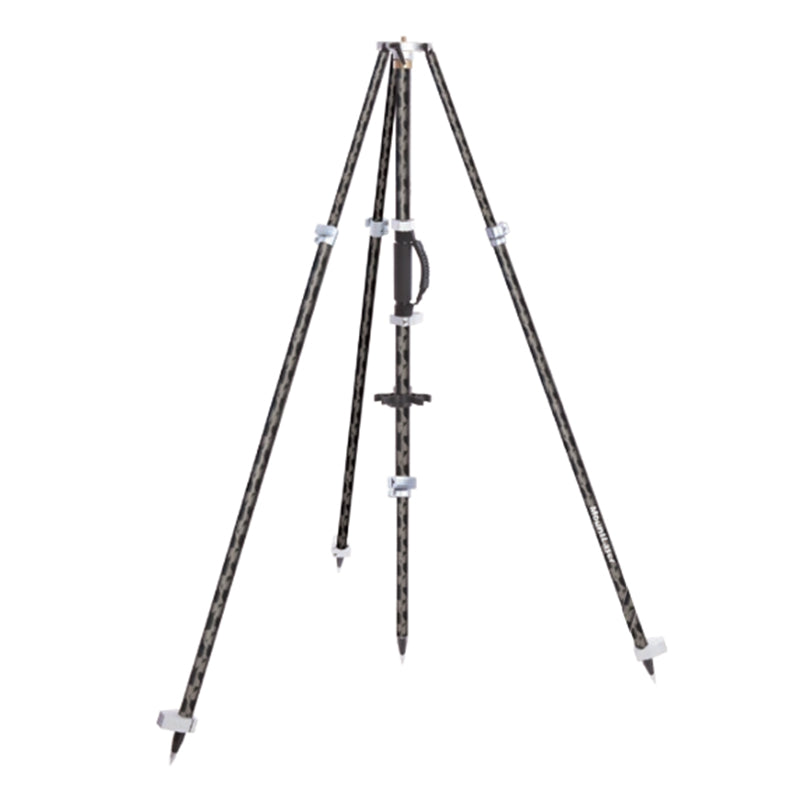
In the demanding world of engineering and land surveying, the stability of your equipment is the foundation of your data's integrity. For decades, surveyors have battled the trade-off between portability and performance. Enter Carbon Fiber GNSS Tripods – a technological leap that is redefining fieldwork standards. Unlike traditional aluminum or steel tripods, Carbon Fiber GNSS Tripods combine exceptional strength with remarkable lightness, directly addressing the core challenges of modern surveying.
How Carbon Fiber GNSS Tripods Achieve a 30% Boost in Efficiency and Accuracy?
The claim of a 30% improvement is significant and rests on the tangible physical and operational advantages of carbon fiber composite technology. Here’s a breakdown of how this performance leap is achieved.
1. Unmatched Strength-to-Weight Ratio: Faster Deployment, Less Fatigue
Carbon fiber’s core advantage lies in its exceptional strength-to-weight ratio. A typical carbon fiber GNSS tripod can be up to 40-50% lighter than its aluminum counterpart while offering equal or greater load capacity and rigidity.
This translates directly into efficiency gains:
Rapid Setup and Movement: Survey crews can move between setup points much faster, carrying less weight over long distances or difficult terrain.

Reduced Operator Fatigue: Less physical strain means crews can maintain peak performance and focus for longer hours, reducing errors caused by exhaustion.
Enhanced Portability: The lightweight nature makes it easier to transport and maneuver in constrained spaces, from dense urban sites to remote wilderness.
2. Superior Damping and Thermal Stability: The Foundation of Accuracy
Precision is compromised by vibration and environmental expansion/contraction. Carbon fiber excels here:
Vibration Damping: Carbon fiber composites naturally absorb and dissipate high-frequency vibrations from wind, ground movement, or nearby machinery far more effectively than metal. This allows the GNSS receiver to settle faster and maintain a steadier signal lock, crucial for achieving high-accuracy coordinates.
Low Thermal Expansion: Carbon fiber has a near-neutral coefficient of thermal expansion. Whether under the blazing sun or in cooler mornings, the tripod legs maintain their length and geometry. This eliminates subtle errors introduced by metal tripods that expand or contract with temperature changes, ensuring consistent height measurements and instrument alignment throughout the day.
3. Robust Durability in Harsh Environments
Field equipment faces mud, water, salt, and impacts. Carbon fiber is inherently corrosion-resistant and does not rust. When paired with high-quality anodized aluminum or stainless steel fittings, a carbon fiber GNSS tripod withstands harsh chemical and moisture-laden environments that would degrade metal tripods over time. This durability reduces long-term replacement costs and ensures reliable performance in all conditions, from coastal topo surveys to construction sites.
Broad Application Scope: Where Carbon Fiber GNSS Tripods Shine
Construction & Engineering Surveys: For precise layout, as-built verification, and deformation monitoring where speed and reliability on busy sites are critical.
Geodetic & Control Network Surveys: Where ultimate stability over long observation periods is non-negotiable for establishing fundamental control points.
Land Topographic & Cadastral Mapping: Enhancing productivity for surveyors covering large, often difficult-to-access areas.
Infrastructure Projects (Roads, Railways, Utilities): Supporting rapid, accurate data collection for planning, building, and maintaining linear assets.
Environmental & Agricultural Monitoring: Ideal for long-term installation of sensors or receivers in variable outdoor conditions.
Key Considerations When Choosing a Carbon Fiber GNSS Tripod
Not all Carbon Fiber GNSS Tripods are created equal. When selecting one for your professional needs, consider these factors:
Carbon Fiber Quality & Layup: Seek information on the grade of carbon fiber and the composite layup process. A well-constructed, multi-layer leg is more robust than a thin, hollow tube.
Load Capacity: Ensure the tripod’s rated capacity exceeds the total weight of your GNSS receiver, antenna, and any ancillary equipment.
Leg Locking Mechanism: Choose between quick-release levers or screw locks based on your preference for speed versus absolute secureness. Ensure the mechanism is durable and easy to operate with gloves.

Footing System: Look for interchangeable feet (e.g., metal spikes for soft ground, rubber pads for hard surfaces) to guarantee stability on any terrain.
Compatibility: Verify that the tripod head or mounting thread is compatible with your specific GNSS equipment.
Conclusion
The transition to Carbon Fiber GNSS Tripods represents a fundamental shift in field surveying methodology. By directly tackling the burdens of weight, instability, and environmental sensitivity, they deliver quantifiable gains—streamlining operations, safeguarding data precision, and protecting your investment against the rigors of the field.
The core advantages are undeniable: a 30% improvement in efficiency and accuracy driven by unparalleled lightness, vibration damping, and thermal stability.
Ready to experience the revolution in your fieldwork? Don’t settle for less. Contact Mountlaser, a leading Carbon Fiber GNSS Tripods manufacturer, today to discuss your specific requirements. Explore their professional range of high-precision Carbon Fiber GNSS Tripods and discover how the right partnership with a dedicated Carbon Fiber GNSS Tripods supplier can elevate your project outcomes.