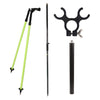
Stable Measurements in Rough Terrain: Why a Quality GNSS Rod/Bipod Kit Matters
Why GNSS Rod & Bipod Kit Stability Matters on Every Job Site?
Your high‑end RTK GNSS receiver can only deliver reliable data when paired with solid supporting hardware. When your GNSS rod or bipod fails out in the field, the cost goes beyond damaged accessories. It means unstable readings, repeated field setups, delayed project deliverables and unhappy clients. For land surveyors, mapping specialists and construction crews, selecting a proper GNSS rod and bipod kit directly impacts measurement accuracy, field efficiency and long‑term equipment budgetsMountlaser.
Every survey rod has physical limits. Material quality, locking hardware and bipod fit decide whether your setup holds steady for 2‑3 seasons or wears out after a handful of tough job sites. In this guide, we break down aluminum and carbon‑fiber rod options, share key buying considerations and answer common customer questions.

Understanding GNSS Rod and Bipod Kit Basics
Most professional GNSS rod & bipod kits come in two primary pole material options: aluminum and carbon fiber. Each material brings distinct strengths and weaknesses for field survey workflows.
Aluminum GNSS Rod Kits Aluminum survey poles are widely used for general‑purpose field work. They feature high impact resistance and competitive pricing. Aluminum holds up well against knocks, drops and rough site handling, making them ideal for teams with shared equipment. The main downside is added weight. Carrying heavier poles over long distances causes operator fatigue, which may introduce minor measurement drift during long‑hour survey sessions.
Carbon‑Fiber GNSS Rod Kits Carbon‑fiber poles deliver ultra‑light weight and high rigidity. Lower operator fatigue is the biggest advantage for all‑day field mapping. Carbon fiber also has low thermal expansion, keeping height readings consistent under shifting outdoor temperatures. The trade‑off is higher price point; carbon fiber is more prone to cracking upon hard drops or sharp impacts.
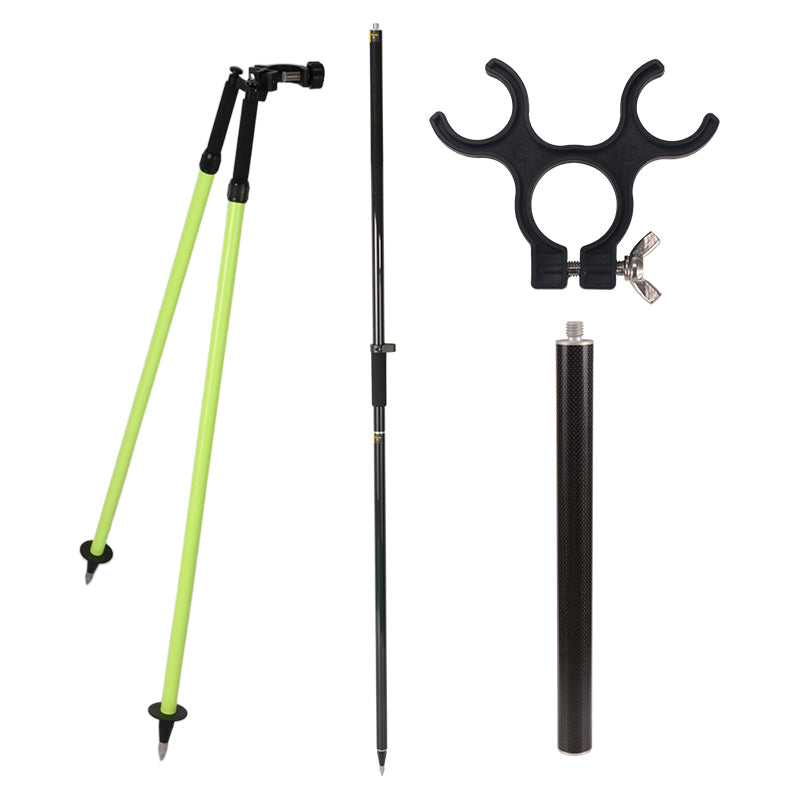
A matched bipod is equally critical. Even a premium‑grade rod will produce noisy RTK data if paired with a loose, poorly‑fitted bipod. Quality kits integrate compatible leg clips, smooth locking mechanisms and anti‑slip feet for uneven ground, mud or sloped terrainMountlaser.
What Causes Poor Performance From a GNSS Rod & Bipod Kit? Common issues that ruin field measurements include: ‑ Mismatched bipod clamps that slip on pole shafts ‑ Cheap plastic lock components that jam with dust and mud ‑ Excessive total kit weight leading to surveyor fatigue ‑ Damaged carbon‑fiber hidden cracks from previous drops ‑ Unclear or worn‑off height scale markings affecting height‑to‑antenna input
All these factors create avoidable measurement errors and slow down your daily field operations.
Core Advantages of a Quality GNSS Rod/Bipod Kit
What a reliable GNSS rod & bipod kit delivers:
- Improved data consistency: Minimizes pole wobble and vibration‑caused RTK errors
- Fast field deployment: Quick‑release locks reduce setup and repositioning time
- Reduced operator fatigue: Ergonomic build for long topographic or layout projects
- Cross‑terrain compatibility: Stable support on slopes, gravel, muddy construction sites
- Durable long‑term service life: Corrosion‑resistant hardware for all‑weather outdoor use
Investing in a matched complete kit minimizes field downtime and protects your expensive GNSS RTK receiver investment.
Purchase Considerations Before Buying a GNSS Rod & Bipod Kit
What to check before placing your order:
- Rod Material: Select aluminum for heavy site abuse and budget projects; pick carbon‑fiber for lightweight, high‑precision daily survey work.
- Extended & Collapsed Length: Confirm maximum working height and transport length. More telescopic segments improve portability but may introduce slight shaft wobble.
- Bipod‑Pole Compatibility: Verify clamp inner diameter matches your rod outer dimension. Mismatched clamps slide and destroy measurement stability.
- Locking Mechanism: Twist‑lock designs are fast for field adjustment; lever locks offer stronger clamping force but require regular cleaning from dirt and mud.
- Hardware & Scale Markings: Look for corrosion‑resistant metal parts and permanent, clear height scales for accurate antenna‑height entry.
- Optional Attachments: Check whether extension poles, heavy‑duty leg clips or mounting clips are included or sold separately.
- Receiver Top Mount: Confirm top adapter thread fits your GNSS RTK receiver.
- Supplier Warranty & Support: Choose trusted suppliers such as Mountlaser with clear product support for survey accessories.
Mountlaser provides a full lineup of GNSS rod and bipod kits including aluminum, carbon‑fiber and hybrid combinations. Whether you need a basic entry‑level kit or premium lightweight carbon‑fiber set for mapping work, our range covers diverse field requirements. Reach out to our team to confirm kit fit for your existing GNSS equipment.

Frequently Asked Questions About GNSS Rod & Bipod Kit
Q1: Can I take measurements holding the GNSS rod by hand instead of using a bipod? A: Hand‑held operation creates constant small wobble, lowering RTK fix quality and introducing measurement deviation. A bipod stabilizes the pole, removes human‑induced vibration and delivers repeatable survey data during extended data collection.
Q2: Is carbon‑fiber always better than aluminum for GNSS survey poles? A: Not necessarily. Carbon‑fiber weighs less and performs better under temperature changes yet cracks under heavy impact. Aluminum stands up better against drops and site knocks and fits construction crews with rough working environments. Match your choice to site conditions and project budget.
Q3: Can I mix rod and bipod purchased from different brands? A: Technically possible if diameter dimensions match, yet cross‑brand combinations often suffer slipping clamps or alignment issues. A factory‑matched kit guarantees proper fit and stable performance.
Q4: How should I maintain my GNSS rod and bipod kit after fieldwork? A: Wipe dirt, mud and sand from locks, clamps and shaft surfaces after every job. Do not over‑tighten locking knobs. Inspect carbon‑fiber poles for hidden cracks after any hard impact. Store in dry protective bags away from long‑term direct sunlight.
Q5: Do I need an extension pole for my GNSS rod kit? A: Extension poles such as the EPA25‑10 help achieve higher working height for obstacles like vegetation or building features. Evaluate your typical site conditions to decide if this accessory is required.
Conclusion
Choosing the correct GNSS rod and bipod kit is more than picking lightweight or low‑priced hardware. It balances material performance, component compatibility, terrain needs and project budget.
The buying tips above will help you avoid unstable setups, measurement drift and premature accessory wear. A well‑selected matched kit cuts field frustration, improves survey accuracy and delivers better return on your GNSS equipment investment.
Whether you run a small survey team or manage a large fleet of RTK units, treating your rod‑and‑bipod setup as critical survey hardware pays dividends on‑site. Explore Mountlaser’s GNSS Rod/Bipod Kit collection to find stable, professional accessories built for real‑world survey conditions.
-
Posted in
surveying equipment