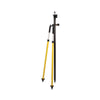
Why Use a 360-Degree Prism? Boost Efficiency for Field Survey & Construction Work
In land surveying and construction, every measurement needs to be accurate, reliable, and efficient. A traditional single prism may require careful orientation toward the total station to maintain a clear reflective path. When the target direction changes frequently, this can increase setup time and interrupt fieldwork.
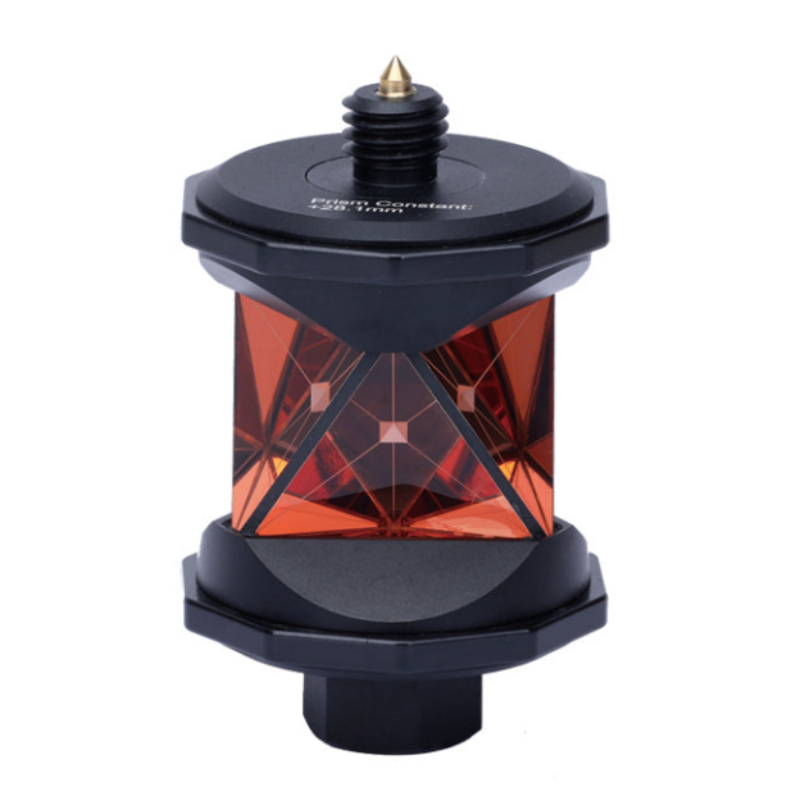
A 360-degree prism is designed to reflect measurement signals from multiple directions, helping robotic total stations track the target without requiring constant manual prism rotation. For surveyors and construction teams, a 360-degree prism system can simplify target positioning, reduce unnecessary adjustments, and improve productivity on busy job sites.
Whether you are performing construction layout, topographic surveys, or engineering measurements, choosing the right 360-degree prism can make daily fieldwork more convenient.

5 Benefits of Using a 360-Degree Prism
1. Improve Field Survey Efficiency
A 360-degree prism provides reflective coverage around the target, allowing a compatible robotic total station to observe it from different horizontal directions. This reduces the need to repeatedly turn the prism toward the instrument.
For surveyors working across large sites or moving between multiple measurement points, this design can help streamline daily operations and save valuable field time.
2. Support Robotic Total Station Tracking
Robotic total stations are widely used for one-person surveying and construction layout. A compatible 360-degree prism helps maintain target visibility as the surveyor moves around the job site.
The improved flexibility is useful for setting out points, checking elevations, and collecting field data. However, tracking performance depends on the total station, prism design, working conditions, and line of sight.
3. Maintain Reliable Measurement Accuracy
Measurement accuracy depends on more than the prism's reflective surface. Prism constant, pointing accuracy, centering, leveling, and compatibility with the total station all affect the final results.
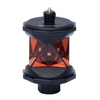
Many 360-degree prism systems use multiple mini prisms arranged to provide multi-directional reflection. Selecting a prism with suitable specifications helps support consistent measurements for professional surveying and construction work.
4. Adapt to Different Construction Tasks
A 360-degree prism system can support a range of field applications, including:
-
Construction layout: Set out building foundations, structural points, and site boundaries.
-
Topographic surveying: Collect position data across terrain and developed areas.
-
Road and infrastructure projects: Support alignment checks and construction measurements.
-
As-built surveys: Verify completed structures against design coordinates.
-
Machine control and grade checking: Support compatible robotic measurement workflows.
The correct prism configuration depends on the project, instrument, and required measurement accuracy.
5. Make Equipment Setup More Convenient
Different 360-degree prism systems offer different mounting options, such as 5/8"-11 threads, quick-release adapters, prism poles, and tribrach-compatible assemblies.
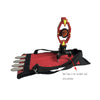
Choosing a suitable configuration can simplify installation and make it easier to move between survey tasks. Protective cases and durable housings are also useful for transporting equipment between field locations.

How to Choose the Right 360-Degree Prism System
Before purchasing a 360-degree prism, consider the following factors to ensure it meets your equipment and project requirements.
1. Check Total Station Compatibility
Not every 360-degree prism is suitable for every total station. Some models are designed for specific instrument systems, including Swiss-style or TP-style equipment.
Confirm the intended instrument type and tracking requirements before ordering. If you use a robotic total station, check that the prism supports the instrument's tracking mode.
2. Confirm the Prism Constant
The prism constant is an important specification in distance measurement. Different 360-degree prism models may have different constants, such as +0 mm, +2 mm, +23.1 mm, or +30 mm.
Always verify the value specified for your selected model and configure the correct prism constant in the total station. Do not assume that all 360-degree prisms use the same setting.
3. Check Accuracy and Prism Design
Review the manufacturer's specifications for pointing accuracy, centering accuracy, beam deviation, and reflective element design.
For precision construction layout or engineering surveys, choose a model that meets the project's measurement tolerances. A higher-specification prism may be appropriate for demanding work, while general site surveys may require a different configuration.
4. Select the Correct Mounting System
Check the thread size, adapter type, prism height, and pole connection before purchasing.
A model with a 5/8"-11 thread may suit certain standard surveying setups, while a quick-release adapter can be useful for faster equipment changes. Make sure the mounting components match your existing poles and accessories.
5. Consider Durability and Included Accessories
Surveying equipment is frequently exposed to dust, vibration, transport, and changing weather conditions. Look for a suitable protective housing and a carrying case if your work involves frequent movement between sites.
Also confirm what is included in the package. Some products include only the prism, while others are supplied with adapters, poles, stands, or protective cases.

Frequently Asked Questions (FAQ)
Q1: What is a 360-degree prism used for?
A 360-degree prism is used with compatible total stations, particularly robotic total stations, to reflect measurement signals from multiple horizontal directions. It is commonly used in construction layout, topographic surveys, and engineering measurements.
Q2: What is the difference between a 360-degree prism and a standard prism?
A standard single prism generally needs to be oriented toward the total station for effective reflection. A 360-degree prism uses multiple reflective elements to provide wider angular coverage, reducing the need for manual rotation during suitable surveying workflows.
Q3: Are all 360-degree prisms compatible with robotic total stations?
No. Compatibility depends on the total station model, prism geometry, tracking system, and other technical specifications. Check the product details and instrument requirements before purchasing.
Q4: Does the prism constant affect measurement accuracy?
Yes. The prism constant is used to account for the reflective target's optical characteristics in distance measurements. An incorrect setting can introduce systematic distance errors. Always use the specified constant for your selected prism.
Q5: Do I need a prism pole or adapter?
That depends on the product and your existing equipment. Some 360-degree prisms connect directly to a compatible mount, while others require a prism pole, quick-release adapter, or additional support. Check the package contents before ordering.
Q6: How should I maintain a 360-degree prism?
Keep the reflective surfaces clean and free from dust, fingerprints, and scratches. Use an appropriate lens-cleaning cloth, avoid abrasive materials, and store the prism in a protective case when not in use. Inspect the mounting connections and leveling components regularly.
Choose a 360-Degree Prism for Your Surveying Needs
A suitable 360-degree prism system can make field surveying more efficient by improving multi-directional visibility, supporting robotic total station tracking, and reducing repeated target adjustments.
Before choosing a model, compare instrument compatibility, prism constant, accuracy specifications, mounting options, and included accessories. These checks help ensure that your equipment matches your workflow and project requirements.
Explore the Mountlaser 360-Degree Prism System Collection to find prism assemblies and accessories for your surveying and construction applications.
-
Veröffentlicht in
land surveying, surveying equipment