From RTK to Total Station: The Versatile Applications of Carbon Fiber Survey Poles
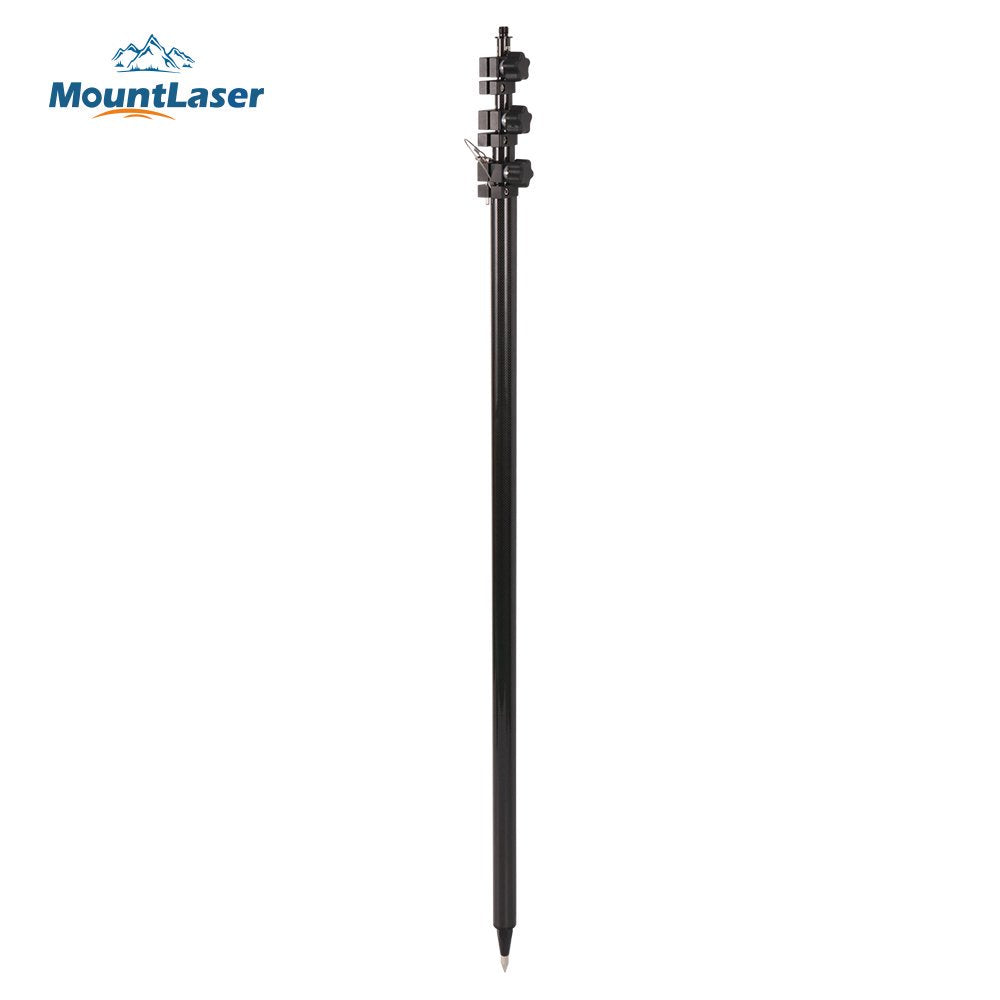
Modern surveying requires equipment that combines accuracy, portability, durability, and efficiency. Among the many accessories used by professional surveyors, Carbon Fiber Survey Poles have become an increasingly important part of modern field surveying workflows. From RTK and GNSS positioning to Total Station measurements, Carbon Fiber Survey Poles provide a stable and lightweight platform for mounting receivers, antennas, prisms, and other surveying accessories.
Compared with conventional metal poles, Carbon Fiber Survey Poles offer an attractive combination of low weight and high stiffness. This makes them particularly useful for surveyors who spend long hours carrying equipment and repeatedly setting up measurement points. With different fixed-length and telescopic configurations available, Carbon Fiber Survey Poles can adapt to a wide range of engineering and surveying requirements.
Why Are Carbon Fiber Survey Poles Important for Modern Surveying?
Survey poles may appear to be simple accessories, but their stability directly affects field measurement workflows. A pole that bends, shifts, or is difficult to position can increase setup time and introduce unnecessary measurement errors.
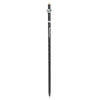
Carbon Fiber Survey Poles are designed to provide a rigid support structure while keeping overall weight relatively low. Carbon fiber is known for its high stiffness-to-weight ratio, making it suitable for applications where both portability and stability are important. Industry products commonly combine carbon fiber shafts with bubble levels, threaded mounting systems, locking mechanisms, and adjustable sections.
For professional surveyors, this means Carbon Fiber Survey Poles can help create a more efficient workflow from equipment setup to point measurement.
Lightweight Construction for Long Field Operations
One of the most important advantages of Carbon Fiber Survey Poles is their lightweight construction. Surveyors may carry a rover receiver, controller, battery, prism, tripod, and other accessories throughout the working day. Reducing the weight of the pole can make equipment easier to transport and handle.
This is especially valuable for large construction sites, topographic surveys, road projects, and mapping operations where surveyors frequently move between measurement points.
High Rigidity for Stable Measurements
In addition to being lightweight, Carbon Fiber Survey Poles offer high stiffness. A rigid pole helps reduce unwanted bending and movement when a GNSS receiver or prism is mounted at the top.

For RTK and Total Station workflows, maintaining a stable and properly vertical pole is essential. Many professional models also include integrated bubble levels or vial systems to assist with vertical alignment.
Carbon Fiber Survey Poles for RTK and GNSS Surveying
One of the most common applications for Carbon Fiber Survey Poles is RTK and GNSS surveying. RTK technology allows surveyors to collect accurate positioning data efficiently, but the receiver must be mounted at a known and stable height.
A Carbon Fiber Survey Pole provides a practical support structure for the GNSS rover receiver. Standard mounting configurations, such as 5/8"-11 threads, are widely used for compatibility with GNSS antennas and surveying accessories.
RTK Point Collection and Stakeout
During RTK surveying, operators often move between multiple points across a construction site or open field. Carbon Fiber Survey Poles make this process easier by combining portability with rigidity.
For construction layout, boundary surveys, topographic mapping, and point staking, Carbon Fiber Survey Poles can help surveyors quickly position the receiver and maintain consistent pole height.
GNSS Mapping and GIS Data Collection
Carbon Fiber Survey Poles are also useful for GNSS mapping and GIS data collection. Surveyors working on infrastructure, utilities, agriculture, environmental mapping, and geographic information projects may need to collect large numbers of field points.
A lightweight carbon fiber pole can reduce physical fatigue while allowing the GNSS antenna to remain securely positioned during data collection.
Carbon Fiber Survey Poles for Total Station Applications
Although RTK and GNSS are major applications, Carbon Fiber Survey Poles are not limited to satellite positioning. They can also be used as prism poles for Total Station surveying.
A Total Station measures angles and distances to a prism or target. Therefore, the prism must be positioned accurately and held as vertically and steadily as possible. Carbon Fiber Survey Poles provide a rigid support for mounting surveying prisms and can be particularly useful during construction layout, deformation monitoring, and conventional land surveying.
Prism Positioning and Construction Layout
When using a Total Station, surveyors may repeatedly position a prism at different control or layout points. A stable Carbon Fiber Survey Pole can make these repeated operations more convenient.
Telescopic models can also provide adjustable working heights, allowing surveyors to adapt the pole to different terrain and project requirements. Some professional prism poles incorporate twist locks, quick-release systems, graduated scales, and bubble levels for faster field operation.

Robotic Total Station Workflows
Carbon Fiber Survey Poles can also support robotic Total Station workflows where surveyors frequently move a prism around a construction or engineering site.
The combination of a lightweight pole, stable prism mounting, and ergonomic locking mechanism allows the operator to work efficiently while moving between measurement locations.
Carbon Fiber Survey Poles for Construction and Engineering Projects
Construction surveying often requires equipment to operate in demanding outdoor environments. Roads, bridges, foundations, utilities, buildings, and infrastructure projects may involve uneven terrain, dust, moisture, and frequent equipment transportation.
Carbon Fiber Survey Poles can provide a practical solution for these environments because carbon fiber does not rust like conventional metal materials. Their lightweight structure is also useful when surveyors need to carry equipment over large or difficult job sites.
For construction professionals, Carbon Fiber Survey Poles can be used for:
RTK construction staking
Foundation positioning
Road and highway surveying
Utility mapping
Topographic surveys
Boundary surveys
GNSS data collection
Total Station prism positioning
Infrastructure inspection
Engineering measurement
Key Advantages of Carbon Fiber Survey Poles
The popularity of Carbon Fiber Survey Poles comes from several practical advantages.
1. Lightweight and Portable
The low weight of carbon fiber makes Carbon Fiber Survey Poles easier to carry and operate during long field sessions.
2. High Rigidity
The rigid carbon fiber structure helps maintain stable positioning for GNSS receivers and surveying prisms.
3. Corrosion Resistance
Unlike conventional metal materials, carbon fiber does not rust, making Carbon Fiber Survey Poles suitable for many outdoor environments.
4. Adjustable Configurations
Telescopic Carbon Fiber Survey Poles can provide adjustable working heights and compact storage dimensions, improving transportation convenience.
5. Professional Compatibility
Many Carbon Fiber Survey Poles use standard mounting threads and can be configured for GNSS receivers, antennas, prisms, controllers, and other surveying accessories.
How to Choose the Right Carbon Fiber Survey Poles?
Before purchasing Carbon Fiber Survey Poles, surveyors should consider several factors.
First, check the required working height. Fixed-length poles provide consistent dimensions, while telescopic poles offer greater flexibility.
Second, confirm the mounting thread and equipment compatibility. A common configuration is a 5/8"-11 mounting thread, but users should always verify the exact receiver, antenna, prism, or accessory specifications before ordering.
Third, consider the locking mechanism. Twist locks, clamp locks, and quick-release systems provide different operating experiences.
Finally, check whether the pole includes a bubble level, graduated markings, carrying bag, replaceable tip, or other accessories that may improve field productivity.
Buying Considerations for Carbon Fiber Survey Poles
When purchasing Carbon Fiber Survey Poles, consider the following points:
Equipment Compatibility: Confirm the pole's mounting thread and compatibility with your GNSS receiver, antenna, prism, or Total Station accessories.
Length: Select a fixed or telescopic model according to your required working height and transportation needs.
Rigidity: Choose a pole with sufficient stiffness for your equipment and intended surveying application.
Locking System: Make sure the locking mechanism provides secure height adjustment without unwanted movement.
Leveling System: A built-in bubble level can make vertical positioning faster and more convenient.
Material Quality: Check carbon fiber construction, surface finish, joints, and hardware quality.
Field Environment: Consider whether the pole will be exposed to rain, dust, temperature changes, or demanding construction conditions.
Accessories: Check whether a carrying bag, tip, bubble level, adapter, or other accessories are included.

FAQ About Carbon Fiber Survey Poles
What are Carbon Fiber Survey Poles used for?
Carbon Fiber Survey Poles are commonly used for RTK, GNSS, GPS, Total Station, prism positioning, construction layout, mapping, and engineering surveying.
Are Carbon Fiber Survey Poles suitable for RTK?
Yes. Carbon Fiber Survey Poles are widely used for mounting RTK and GNSS rover receivers because they combine lightweight construction with high rigidity. Many models also use standard 5/8"-11 mounting threads.
Can Carbon Fiber Survey Poles be used with Total Stations?
Yes. Carbon Fiber Survey Poles can be configured as prism poles for Total Station measurements. A stable pole helps support accurate prism positioning.
Are Carbon Fiber Survey Poles better than aluminum poles?
It depends on the application. Carbon fiber generally offers a strong combination of low weight and rigidity, making it attractive for professional field surveying. Aluminum may be preferred where lower purchase cost or greater impact tolerance is the priority.
What thread should I choose?
Many surveying poles use a 5/8"-11 thread, but compatibility should always be confirmed against the specific GNSS receiver, antenna, prism, or accessory before purchasing.
Summary: A Versatile Tool for Professional Surveying
From RTK and GNSS positioning to Total Station prism measurement, Carbon Fiber Survey Poles have become a versatile accessory for modern engineering and surveying workflows. Their lightweight construction, high rigidity, portability, corrosion resistance, and flexible configurations make Carbon Fiber Survey Poles suitable for professional surveyors working across construction, mapping, infrastructure, land surveying, and engineering projects.
For surveyors who need to carry equipment over long distances, frequently change measurement points, or work with both GNSS and Total Station systems, Carbon Fiber Survey Poles can provide an efficient balance between portability and measurement stability.
Contact Mountlaser for Carbon Fiber Survey Poles
Looking for reliable Carbon Fiber Survey Poles for RTK, GNSS, Total Station, or construction surveying? Contact us today to discuss your required length, mounting thread, locking mechanism, accessories, and application. Our team can help you find the right Carbon Fiber Survey Poles for your professional surveying needs.