High-Capacity Total Station Battery vs. Standard Pack: Which One Fits Your Surveying Workflow?
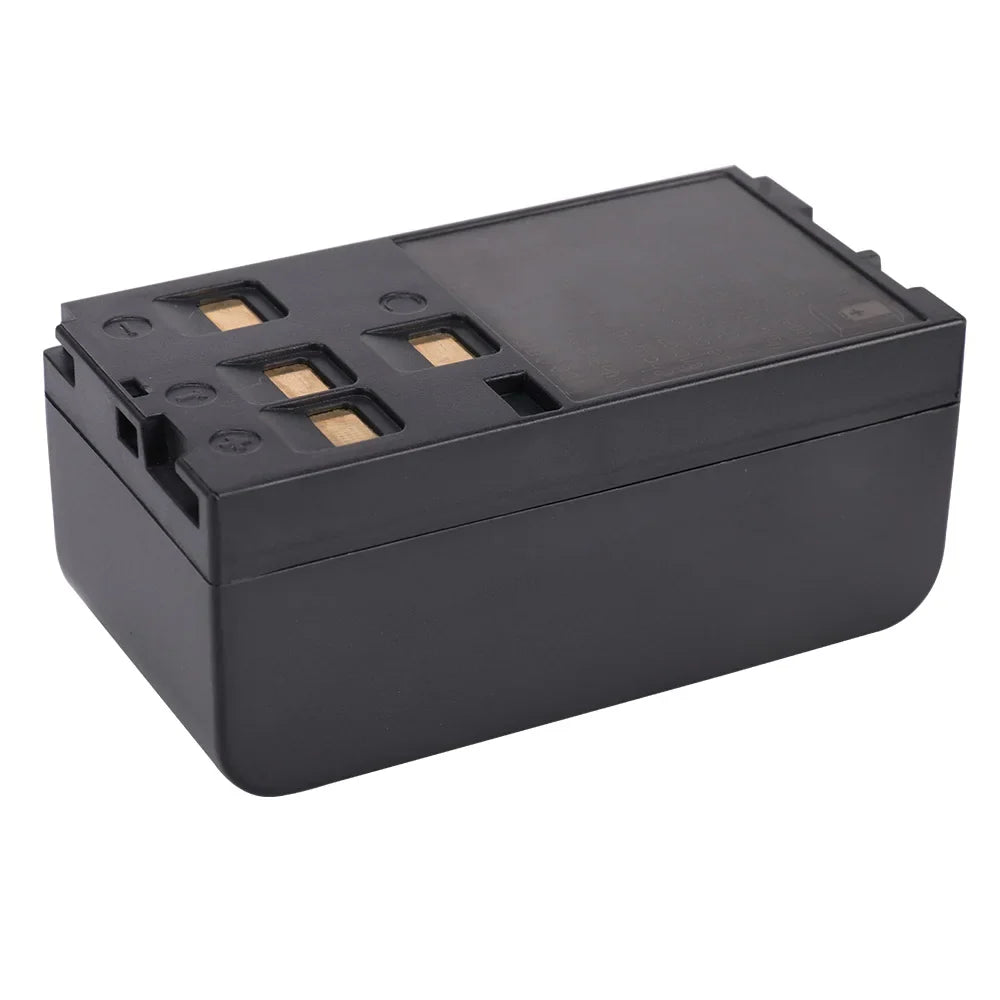
For professional surveyors, engineers, and construction teams, a reliable power source is just as important as the total station itself. When a surveying project involves long field hours, remote locations, continuous measurements, or demanding construction environments, choosing the right Total Station Battery can directly affect productivity and workflow efficiency.
But should you choose a high-capacity total station battery or a standard battery pack?
The answer depends on your surveying workflow, instrument power requirements, working hours, and field conditions. A standard Total Station Battery may be sufficient for short jobs and routine measurements, while a long-lasting total station battery can be a better solution for full-day surveying and remote projects.
In this guide, we compare high-capacity and standard battery packs and explain how to choose the right Total Station Battery for your specific surveying needs.
High-Capacity Total Station Battery vs. Standard Battery Pack
The most important difference between these two battery options is their available energy capacity and expected runtime.
A standard battery pack is generally designed for regular surveying operations where the total station is used for a limited number of hours. A high-capacity total station battery, on the other hand, is designed to provide longer operating time and reduce the frequency of battery replacement.
What Is a Standard Total Station Battery?
A standard Total Station Battery provides the basic power required to operate a compatible total station.
It can be a practical option for:
Short surveying projects
Indoor measurements
Construction layout tasks
Routine land surveying
Projects where spare batteries are readily available
Surveyors who can recharge batteries between field sessions
For these applications, a standard total station battery pack can provide a good balance between cost, portability, and operating time.
What Is a High-Capacity Total Station Battery?
A high-capacity total station battery is designed to provide greater energy storage than a conventional battery pack.
Higher-capacity batteries can help reduce:
Battery replacement frequency
Charging interruptions
Field downtime
The number of spare batteries required
For surveyors working on large construction sites, highways, infrastructure projects, mining sites, or remote locations, a long-lasting total station battery can make the daily workflow considerably more convenient.

Why Battery Capacity Matters in Surveying?
Battery capacity is commonly expressed in mAh or Wh. In general, a higher capacity means that the battery can store more energy, although actual runtime also depends on the total station model, operating conditions, temperature, measurement mode, and power consumption.
For example, Mountlaser offers compatible battery solutions such as the BDC46B, which uses Li-ion technology and is specified at 7.2V and 2600mAh for compatible SET/NET 210/510/610 systems.
This illustrates an important point: choosing a Total Station Battery should never be based on capacity alone. Voltage, connector design, physical dimensions, and equipment compatibility are equally important.
Higher Capacity Means Fewer Battery Changes
For a surveyor working an entire day in the field, repeatedly changing batteries can interrupt the measurement process.
A high-capacity total station battery can extend the time between battery changes, allowing operators to concentrate on:
Point measurement
Stakeout
Construction layout
Boundary surveying
Topographic surveying
Monitoring
Data collection
This can be especially useful when the surveying location is far from the vehicle, office, or charging station.

When Should You Choose a High-Capacity Total Station Battery?
A high-capacity battery is particularly useful when your surveying workflow requires extended operating time.
Full-Day Field Surveying
If your team regularly spends an entire day outdoors, a long-lasting total station battery can reduce the need to stop for battery replacement.
This is valuable for large-scale topographic surveys, road construction, building layout, and infrastructure projects.
Remote Surveying Projects
Remote surveying locations may have limited access to electrical outlets and charging equipment.
In these situations, carrying a high-capacity total station battery together with one or two compatible backup batteries can provide greater operational flexibility.
Continuous Measurement Work
Certain applications require the total station to remain powered for extended periods.
For example:
Construction monitoring
Deformation monitoring
Long-distance layout
Infrastructure surveying
Bridge and tunnel surveying
Large-area topographic mapping
For these workflows, a reliable Total Station Battery is an important part of field preparation.
When Is a Standard Total Station Battery Enough?
A high-capacity battery is not automatically the best choice for every surveyor.
A standard total station battery pack may be more suitable when:
The Project Is Short
For short measurement tasks lasting only a few hours, additional battery capacity may not provide a meaningful advantage.
Charging Is Easily Available
If your team works close to an office, vehicle, or charging station, standard batteries can be recharged quickly between field sessions.
Weight and Portability Are Priorities
Surveyors often carry tripods, prisms, poles, controllers, batteries, and other accessories. A compact battery can help reduce the total amount of equipment that needs to be carried.
You Already Carry Multiple Spare Batteries
If your workflow includes several fully charged backup batteries, a standard battery can provide sufficient flexibility without requiring a higher-capacity solution.
Total Station Lithium Battery: Why Li-Ion Is Popular
Many modern surveying battery solutions use lithium-ion technology because of its combination of energy density, portability, and rechargeable performance.
A total station lithium battery can offer several practical advantages:
High energy density
Lightweight construction
Stable power output
Convenient rechargeable design
Low self-discharge
Good portability
Mountlaser also highlights lithium-ion battery solutions for surveying equipment that are designed to provide extended runtime and reliable field performance.
However, the battery chemistry alone does not guarantee good performance. The quality of the battery cells, protection circuitry, charger, housing, and electrical design all matter.
What Makes a Good Total Station Battery?
When selecting a replacement total station battery, look beyond the advertised capacity.
1. Equipment Compatibility
The first consideration is compatibility.
Before purchasing a Total Station Battery, confirm:
Total station brand
Exact instrument model
Battery model number
Rated voltage
Battery dimensions
Connector configuration
Charger compatibility
A battery that physically fits the compartment may not necessarily be electrically compatible with the instrument.
2. Stable Voltage Output
A professional surveying instrument requires dependable power during operation.
A quality total station battery pack should provide stable output throughout its usable charge range to help maintain reliable equipment operation.
3. Battery Protection
Modern professional battery designs can include protection against conditions such as overcharging, over-discharging, overheating, overcurrent, and short circuits.
Leica Geosystems, for example, identifies integrated charging intelligence, temperature sensing, short-circuit protection, and deep-discharge protection among its battery safety features.
4. Charging Compatibility
A replacement total station battery should be used with a compatible charger.
Using the wrong charger can affect charging performance and may create unnecessary safety risks.
Always verify that the battery and charger are designed to work together.
5. Operating Environment
Surveying equipment is frequently exposed to dust, moisture, temperature changes, vibration, and outdoor handling.
If your projects take place in challenging environments, consider a durable total station battery with appropriate housing and protection.
High-Capacity vs. Standard Total Station Battery: Quick Comparison
| Feature | High-Capacity Total Station Battery | Standard Total Station Battery |
|---|---|---|
| Runtime | Longer | Moderate |
| Battery Changes | Fewer | More frequent |
| Best For | Full-day and remote surveying | Short and routine jobs |
| Portability | May be slightly heavier | Usually compact |
| Field Downtime | Lower | Potentially higher |
| Spare Battery Requirement | Lower | Higher |
| Ideal Users | Professional field teams | Occasional or short-duration users |
The right choice ultimately depends on your workflow rather than simply selecting the battery with the largest capacity.
How to Choose the Right Total Station Battery for Your Workflow?
A simple decision process can help you select the appropriate battery.
Choose a High-Capacity Battery If:
You work more than a standard battery's normal runtime.
Your projects are located far from charging facilities.
You want fewer battery changes.
You frequently perform full-day field surveys.
You work on large construction or infrastructure projects.
You want to reduce field downtime.
Choose a Standard Battery If:
Your surveying sessions are relatively short.
Charging facilities are easily accessible.
You prioritize compact equipment.
You already carry several spare batteries.
Your total station has relatively low power consumption.
For many professional teams, the most practical solution may be a combination of one high-capacity total station battery and one or more standard backup batteries.
Purchase Considerations Before Buying a Total Station Battery
Before purchasing a Total Station Battery, carefully check the following:
Confirm the exact total station model.
Do not rely only on the general brand name.
Check the battery model number.
Compare the existing battery with the replacement specification.
Verify voltage and capacity.
Higher mAh does not automatically mean better compatibility.
Check the connector and physical dimensions.
The battery must fit correctly and connect securely.
Confirm charger compatibility.
The correct charger is essential for safe and efficient charging.
Consider your daily working time.
Choose high capacity when extended runtime is more important than minimum weight.
Consider environmental conditions.
Outdoor projects may require a more durable battery design.
Buy from a professional supplier.
A reliable supplier can help confirm compatibility before purchase.
If you are unsure which Total Station Battery is suitable for your instrument, contact Mountlaser with your total station model and existing battery model. The team can help you identify a compatible battery solution for your surveying workflow.

Frequently Asked Questions About Total Station Battery
How do I choose a Total Station Battery?
Start by checking the total station model, original battery model, voltage, connector, dimensions, and charger requirements. After compatibility is confirmed, select the capacity according to your expected field runtime.
Is a high-capacity total station battery better than a standard battery?
Not necessarily. A high-capacity total station battery is better for long-duration and remote surveying, while a standard battery can be more practical for short jobs, lightweight equipment, and situations where charging is readily available.
What is a total station lithium battery?
A total station lithium battery is a rechargeable battery pack using lithium-ion cells to power compatible total station instruments. Li-ion technology is widely used because it offers a good balance between energy density, weight, and runtime.
Can I use a replacement total station battery?
Yes, a replacement total station battery can be used when it is specifically designed and electrically compatible with the total station model. Always verify voltage, capacity, connector, dimensions, and charger compatibility before purchase.
Does higher mAh always mean longer battery life?
Higher mAh generally indicates greater energy capacity under comparable voltage and conditions, but actual operating time depends on the total station's power consumption, operating mode, battery condition, temperature, and other factors.
How many spare batteries should I carry for field surveying?
The ideal number depends on project duration and access to charging. For a full-day or remote project, carrying at least one fully charged backup Total Station Battery is a practical approach. Longer or multi-day projects may require additional batteries.
Conclusion
Choosing between a high-capacity total station battery and a standard battery pack is ultimately a question of workflow.
For short jobs, routine measurements, and projects with convenient charging access, a standard Total Station Battery can provide sufficient performance while keeping equipment compact.
For full-day field operations, remote construction sites, infrastructure surveying, and continuous measurement tasks, a long-lasting total station battery can reduce battery changes and help minimize unnecessary downtime.
Most importantly, do not select a battery based solely on capacity. Compatibility, voltage, connector design, charger requirements, battery protection, durability, and expected runtime should all be considered before purchase.
If you need help selecting a compatible Total Station Battery, replacement total station battery, or high-capacity total station battery for your surveying equipment, contact Mountlaser for professional battery solutions and compatibility assistance.